Stackable Chairs or Reclining Loungers for Small Patios
Small outdoor areas make furniture choices feel more serious than they do on a large lawn. A balcony, terrace, or compact patio has to handle sitting, moving, storage, and everyday traffic without feeling crowded. Two common approaches are stackable chairs and reclining loungers. Both can support relaxed outdoor use, but they solve the space problem in different ways. The better choice depends on how the area is used, how often furniture is put away, and whether comfort or flexibility matters most.
What each option is built to do
Stackable chairs are designed around the chair footprint. Their strength is straightforward seating that can be grouped, moved, and stored with less fuss. When guests arrive, chairs can be brought out quickly. When the area is needed for something else, they can be stacked and shifted to a corner or shed. This suits spaces that change purpose during the day, such as a terrace used for meals, reading, and plant care.
Reclining loungers are built for longer sitting and lying back. They usually take more room while in use because the seat extends, the back lowers, and the frame needs clearance space behind or beside it. In return, they offer a more restful position than a standard chair. For poolside areas, sunny corners, or a small deck where the main goal is relaxation, that comfort can matter more than the extra floor area.
The term space saving loungers often gets used loosely. Some loungers fold, some stack, and some sit low to the ground. Others are compact in width but still need room to recline. The label alone does not tell the whole story, so it helps to look at how the furniture behaves in the actual setting rather than relying on a product category.
Comparing the way they use space
A chair uses a predictable patch of ground. Even when several chairs are placed side by side, the layout is easy to read. People can pull one out, turn it, or tuck it closer to a table. This makes stackable chairs useful where traffic flow matters, such as a narrow balcony leading to a door or a terrace with a route to steps. The room stays usable because each seat has a clear purpose and a clear edge.
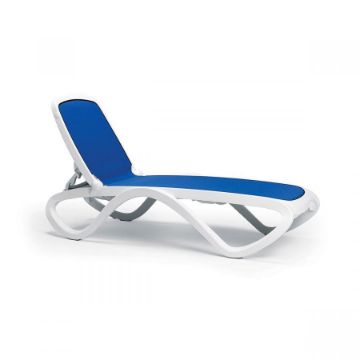
A reclining lounger has a longer profile. When the back is lowered, it occupies more horizontal space than a chair, and the person using it may want a little extra room for legs, bags, or a side table. If several loungers are lined up, the gaps between them become part of the layout. A tight row can look neat but feel awkward to walk through, especially when someone needs to get up while others are still seated.
Storage changes the comparison again. Stacked chairs usually reduce to a smaller group shape, though the stacking height matters if they are kept on a balcony or in a cupboard. Loungers may fold flat but remain long, which can be awkward in a small storage box. Some designs stay outside all season, while others are better moved under cover during rough weather. A durable resin outdoor furniture setup can be practical here because resin pieces are often chosen for outdoor use and easy movement, but the dimensions still need checking.
Comfort over longer periods
For short visits, a chair is usually enough. Dining, a coffee break, or a conversation with a neighbour does not always call for a reclined position. Stackable chairs also support better posture for eating and reading, and they work with tables of different heights. If the outdoor area is an extension of the dining space, chairs naturally fit the pattern.
For long afternoons, a lounger has the advantage. A reclined back, longer seat, and place to stretch out change how the body rests. This is why loungers are common around pools and on sun decks. The trade off is that they are less useful at a dining table and less convenient when the space needs to be cleared quickly. A lounger can also become the main feature of a small area, which affects where everything else is placed.
Mixed seating can work well when the space allows it. One lounger can sit at the quiet end of a terrace, while stackable chairs handle meals and guests. This creates layout zones without making the whole area feel like a furniture display. The key is to leave enough walking room between the relaxed corner and the working seating area. If the passage becomes narrow, the lounger will feel like an obstacle rather than a comfort.
What to check before choosing
Measure the area in its real conditions, not just on paper. Doors can swing outward, planters can protrude, and railings can reduce the usable width. Think about the path from the door to the seating area, then about what happens when all seats are occupied. A layout that looks fine in a photograph may be frustrating when people need to pass behind a chair or step around an open lounger.
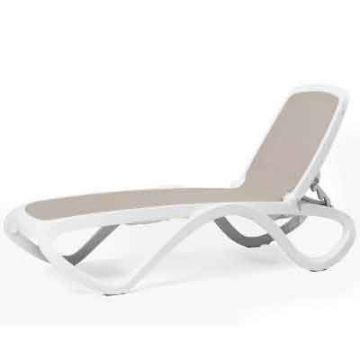
Resin furniture can be a sensible fit for compact outdoor spaces because it is commonly used for chairs, chaise lounges, dining pieces, benches, swings, and poolside products. A site such as outdoor-resin-furniture.com fits that broad category, where the focus is on durable resin pieces for outdoor settings. That context is useful when comparing forms, since the material and shape both influence how easily pieces are moved, arranged, and stored.
Pay attention to the full size of each piece, including arms, extended leg sections, and any sloping back. Check how far a lounger extends when fully reclined, and whether that space overlaps a walkway. For chairs, check how high a stack grows and whether the stacked set can be moved safely without scraping walls or blocking a door. These details are more useful than vague claims about saving room.
When stackable chairs suit best
Stackable chairs fit spaces that need to stay adaptable. They are a strong match for small dining areas, balconies with one table, terraces used by different people during the week, and homes where furniture is often cleared before rain or storms. Their compact storage shape makes them easier to manage when the outdoor area doubles as a utility space.
They also suit people who prefer simple seating with fewer moving parts. A chair usually has fewer positions to adjust and fewer parts to catch on clothing or nearby objects. In a tight area, that simplicity can be welcome. The main limitation is comfort during long lounging sessions. If the goal is to lie back for hours, a chair may feel practical but not restful enough.
When reclining loungers suit best
Reclining loungers fit spaces where relaxation is the main purpose. A sunny balcony, a poolside strip, or a quiet terrace corner can work well with one or two loungers, especially if the layout keeps a clear route through the area. They are also a good match when the furniture stays in place for much of the season and does not need to be stacked every evening.
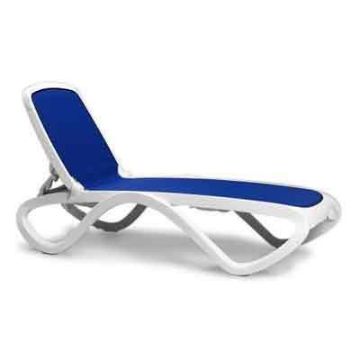
They are less suitable where dining is the priority or where guests often need to move through the seating area. In those settings, a lounger can dominate the floor area and make the space feel smaller. If the lounger has wheels, folding sections, or a slim frame, those features may help, but they do not remove the basic need for reclining room. Comfort has to be weighed against the open space around it.
Making the final choice
Start with the main use of the area. If the space must serve meals, guests, and quick everyday breaks, stackable chairs usually make the layout easier to control. If the space is mainly for resting in the sun, a reclining lounger brings a level of comfort that chairs cannot match. Many small outdoor areas benefit from a mixed setup, with one lounger for longer rest and a few chairs for everything else.
Before committing, sketch the arrangement with the furniture at full size, including the lounger reclined and the chairs pulled out from the table. Leave a practical path through the area and keep storage in mind. The right choice is the one that makes the space feel usable on ordinary days, not only when everything is neatly arranged. In compact outdoor living, comfort and order have to share the same footprint, and the best furniture plan respects both.
Ends · THEOUTDOORNOOK